What is Microsoft's Sustainability Strategy, And How Are Channel Partners Involved?
March 4, 2026 by Joe Panettieri
Microsoft expects to be carbon negative by 2030, and by 2050 the company will remove from the environment all the carbon the firm has emitted either directly or by electrical consumption since it was founded in 1975, the cloud and software giant said in 2020.
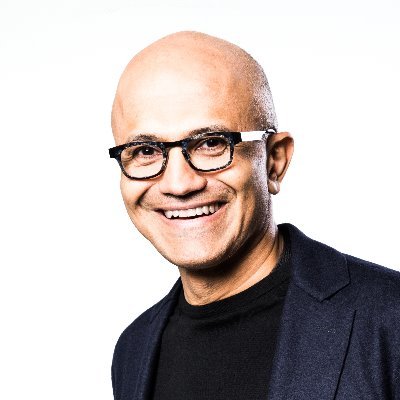
Satya Nadella, CEO, Microsoft
Melanie Nakagawa (pictured above), chief sustainability officer, is leading those efforts. But the software company's sustainability goals don't end there.
Microsoft, led by CEO Satya Nadella, also develops cloud-based sustainability software tools for partners and customers to leverage. And the Microsoft Climate Innovation Fund continues to invest in sustainable startups.
The timeline below, updated regularly, further explains Microsoft's sustainability strategy, key milestones, customer engagements, partner integrations and more. Check back regularly for updates.
February 28 - Pending Data Center Regulations: Microsoft is lobbying for major changes to a Washington data center bill that's nearing a final vote, GeekWire reported.
February 18 - Renewable Energy Milestone: Microsoft has reached its goal of matching its total annual global electricity consumption with renewable sources, The Wall Street Journal reported. Microsoft set the renewable energy goal for itself in 2020, the report noted.
February 10 - Data Centers and Energy Efficiency: Microsoft is exploring using superconducting power lines in its data centers, which could potentially accelerate its massive U.S. build-out of the server warehouses by making them more energy-efficient, Reuters reported.
January 20 - Quantum Computing Toolkit: Microsoft has released the Quantum Development Kit (QDK)-- an open-source developer toolkit for building quantum applications. The software runs on laptops, and GitHub Copilot "makes it quick and easy to get started," the company asserts.
January 20:Microsoft has launched the 2026 Quantum Pioneers Program (QuaPP), which is designed to advance the development of measurement-based quantum computing (MBQC), Quantum Computing Report stated. The program will select up to five research proposals, each eligible for an award of up to $200,000 delivered as a gift. The 12-month program is set to begin in August 2026, the report said.
January 17 - AI Software and Weather Forecasts: Microsoft is promoting Aurora, an AI model designed to help scientists better understand and predict Earth's weather, The Cool Down reported.
January 15 - Carbon Credits: Under a 12-year agreement, Microsoft will purchase 2.85 million credits generated under the Carbon by Indigo program, Indigo's U.S.-based project, the companies said.
Bobby Hollis, VP of energy, Microsoft
January 9 - AI Energy Consumption Concerns - Overblown?: Alarmists are overstating AI data center energy consumption issues, according to Bobby Hollis, VP of energy at Microsoft, told The Edge Singapore. Hollis noted that cloud services initially triggered energy consumption concerns before such concerns dissipated.
Sustainability: December 2025 Updates
December 23 - Eco-Friendly Laptops: Microsoft Surface laptops are eco-friendly devices, the company asserts.
December 15 - Open Letter to Big Tech: The Sierra Club is calling on Amazon, Google, Meta and Microsoft to reject new fossil fuel buildouts for their data centers.
December 8 - Data Center Energy Management: Hanwha and Microsoft are partnering to "set new standards in data center energy management," the two companies said.
December 1 - CEO on AI Energy Concerns: Microsoft CEO Satya Nadella warned that the vast amount of energy consumed by AI could turn people against the industry — and that AI and tech companies need to earn public trust to turn things around, Politico reported.
Sustainability: November 2025 Updates
November 28 - Diversity, Equity and Inclusion (DEI): Microsoft will not publish an updated version of its annual diversity and inclusion report for 2025, ESG Dive reported. Instead, Microsoft will demonstrate its D&I progress through formats like stories, insights and videos, which Microsoft believes are “more dynamic and accessible” and “show inclusion in action,” according to a Microsoft statement to ESG Dive.
November 28 - Data Center Executive Departs: Microsoft veteran Sean James has joined Nvidia as a distinguished engineer of energy systems. He previously was senior director of energy and data center research at Microsoft. His career focus seeks to "contribute significantly to the global dialogue on sustainable computing and energy use in the technology sector," according to James' LinkedIn account. Related: Nvidia sustainability strategies.
November 24 - Power Purchase Agreement (PPA): Microsoft will purchase solar energy from Zelestra to power infrastructure in Spain. As part of the agreement, nonprofit organization ECODES will receive funding to support community-led sustainability initiatives in the region.
November 18 - IT Services and Environmental Goals Research: Roughly 78% of integration-focused organizations highlight IT as a key enabler in achieving sustainability goals, leveraging data, automation, and AI for measurable impact, and 56% of IT teams now lead sustainability efforts beyond IT, up from 38% in 2024. (Source: Global Sustainability Barometer Study from Ecosytm, Kyndryl and Microsoft). Related: All sustainability research reports.
November 18 - Funding AI Services: NVIDIA and Microsoft plan to invest up to $10 billion and up to $5 billion, respectively, in Anthropic. On the flip side, Anthropic has committed to purchase $30 billion in Azure compute capacity.
November 12 - Partner of the Years: Microsoft named EY as its Sustainability Changemaker Partner of the Year for 2025. Three finalists for the world included Schneider Electric, Wipro and NTT Data.
November 12 - Data Center Energy Efficiency: In a successful demonstration, VEIR delivered 3 megawatts of power via a single low voltage cable within a simulated and scalable data center environment. The development could help relieve the power bottleneck facing AI data centers. VEIR raised $75 million in Series B funding in January 2025. Key investors include Munich Re Ventures, Microsoft’s Climate Innovation Fund, and National Grid.
Hi Chris: Thanks for your readership, and your questions. We cover the Amazon and AWS sustainability strategy here. Generally speaking, Microsoft's net-zero timeline (deadline: 2030) is more aggressive than that of Amazon (deadline: 2040).
We continue to update our Microsoft- and Amazon-focused coverage.
The most critical and challenging facet highlighted here is the "Last Mile of Decarbonization." As the article notes, this is where ambition meets the hardest technological and economic realities. For a company of Microsoft's size and energy appetite—especially with the AI boom—replacing that final ~15-20% of fossil-based energy with 24/7 reliable, clean power will be the true test. It will require breakthroughs in grid flexibility, long-duration energy storage, and next-gen nuclear or geothermal that don't yet exist at scale.
This raises a key question about responsibility: Is the role of a tech giant like Microsoft simply to purchase its way to net zero, or to actively invest in and de-risk those breakthrough technologies for the broader market? Their partnership with Constellation on hourly carbon-free energy matching is a promising step toward the latter, as it helps drive innovation in the grid itself.
Their progress is a powerful tailwind for the entire ecosystem, but the final stretch of this marathon will define their legacy. It's a case study we should all be watching closely.
Sustainable IT news & strategies. We empower MSPs, IT service providers, and channel partners to deliver green solutions that help Chief Sustainability Officers (CSOs) meet net-zero goals.





How does Microsoft's sustainability strategy and netzero timeline compare to Amazon? Can you share any comparative data?????
Hi Chris: Thanks for your readership, and your questions. We cover the Amazon and AWS sustainability strategy here. Generally speaking, Microsoft's net-zero timeline (deadline: 2030) is more aggressive than that of Amazon (deadline: 2040).
We continue to update our Microsoft- and Amazon-focused coverage.
Best,
-jp
Editorial Director
Sustainable Tech Partner
The most critical and challenging facet highlighted here is the "Last Mile of Decarbonization." As the article notes, this is where ambition meets the hardest technological and economic realities. For a company of Microsoft's size and energy appetite—especially with the AI boom—replacing that final ~15-20% of fossil-based energy with 24/7 reliable, clean power will be the true test. It will require breakthroughs in grid flexibility, long-duration energy storage, and next-gen nuclear or geothermal that don't yet exist at scale.
This raises a key question about responsibility: Is the role of a tech giant like Microsoft simply to purchase its way to net zero, or to actively invest in and de-risk those breakthrough technologies for the broader market? Their partnership with Constellation on hourly carbon-free energy matching is a promising step toward the latter, as it helps drive innovation in the grid itself.
Their progress is a powerful tailwind for the entire ecosystem, but the final stretch of this marathon will define their legacy. It's a case study we should all be watching closely.